
If you’ve been to any Nigerian market lately, you’ve probably noticed how the groundnut oil price in Nigeria keeps shifting almost every month.
If you’re buying for household cooking or bulk supply, the cost now depends on a mix of market trends, local production, and inflation pressures.
This guide breaks down the current groundnut oil prices, key factors affecting them, and smart buying tips to help you get the best value.
Cost of Groundnut Oil in Nigeria
The price of groundnut oil in Nigerian markets ranges depending on the size and packaging.
Although, smaller retail bottles cost less per unit but more per litre, while bulk buyers enjoy better rates.
Prices slightly differ between urban and rural markets.
Below is the current average market price range for 2025-2026.
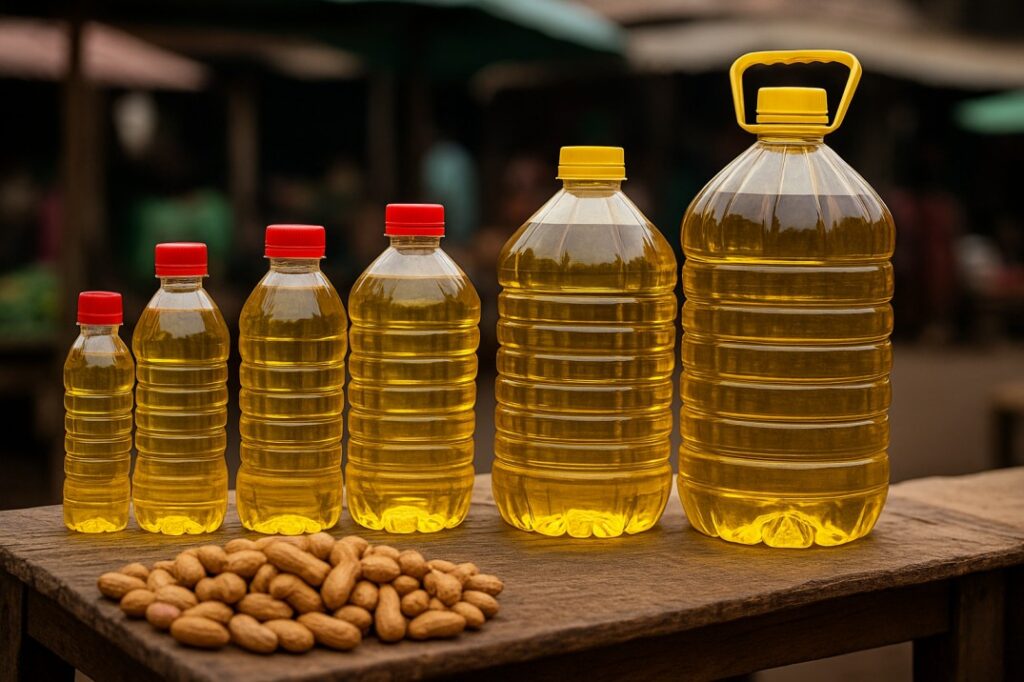
Groundnut Oil Price List in Nigeria (2025 Updated Average Market Range)
| Quantity | Average Price Range (₦) | Description |
| 1 litre of groundnut oil | ₦2,000 – ₦3,000 | Common retail size sold in local stores and markets |
| 2 litres of groundnut oil | ₦3,800 – ₦5,500 | Suitable for small families and household use |
| 3 litres of groundnut oil | ₦5,800 – ₦7,000 | Medium-size jerrycan for regular home use |
| 5 litres of groundnut oil | ₦9,000 – ₦12,000 | Most popular bulk household option |
| 10 litres of groundnut oil | ₦17,000 – ₦23,000 | Common choice for caterers and restaurants |
| 20 litres of groundnut oil | ₦33,000 – ₦45,000 | Preferred by small food businesses and bulk buyers |
| 25 litres of groundnut oil | ₦42,000 – ₦55,000 | Often used by hotels, restaurants, and large-scale caterers |
| 50 litres of groundnut oil | ₦80,000 – ₦100,000 | Bulk commercial supply for distributors and wholesale traders |
The current average price may vary slightly depending on the brand, purity, and processing quality.
Locally pressed groundnut oil usually costs less than refined and branded versions.
You might be interested in Okomu Oil Price List
Overview of the Groundnut Oil Market in Nigeria
Groundnut oil remains one of the most popular edible oils in Nigerian kitchens, valued for its rich flavor, high smoke point, and nutritional benefits.
It’s produced across major states like Kano, Kaduna, Taraba, and Niger, with both local extraction mills and refined brands competing in the market.
However, the market situation has been volatile due to the rising cost of raw groundnuts, fuel, and logistics.
Over the past year, the average cost of groundnut oil has increased by roughly 20% to 30% across most regions.
Prices also vary based on packaging (plastic bottles, gallons, or jerrycans), brand type, and whether the oil is locally processed or refined.
Factors Influencing the Cost of Groundnut Oil in Nigeria
Several factors shape the cost of groundnut oil across Nigerian markets. Understanding them helps buyers make informed purchasing decisions and predict market shifts.
1. Cost of Raw Groundnuts
The foundation of pricing starts with groundnuts themselves.
When the farmgate price of groundnuts increases due to seasonal scarcity or high demand from exporters, the oil price follows.
2. Exchange Rate and Import Costs
Refined groundnut oil, especially those requiring imported additives or packaging materials, is affected by currency fluctuations.
The weaker the naira, the higher the cost of refined oil.
3. Transportation and Fuel Prices
The rise in fuel prices directly impacts logistics.
From transporting raw nuts to moving finished oil to markets, every step adds to the final retail price.
4. Production Costs
Processing and refining groundnut oil require energy, labor, and maintenance.
Inflation in these sectors often results in higher selling prices.
5. Regional Availability
Northern regions where groundnut production is high usually enjoy lower prices than southern urban centers due to shorter supply chains and reduced transport costs.
6. Seasonal Variations
Prices often rise during off-peak farming seasons and drop after harvest.
The first quarter of the year generally sees higher prices due to limited supply.
Buying Tips for Consumers and Businesses
If you’re trying to save money or buy smarter, these tips can help you navigate Nigeria’s groundnut oil market effectively:
- Buy in Bulk: Larger sizes like 10 litres or 25 litres often give better value per litre.
- Check for Purity: Locally pressed oils may contain residues if not properly filtered. Always check color and clarity.
- Compare Local vs Refined: Locally produced groundnut oil is cheaper but may have a shorter shelf life; refined oils last longer.
- Buy After Harvest Season: Prices usually drop after the groundnut harvest (around October–December).
- Store Properly: Keep groundnut oil in a cool, dry place to prevent spoilage and maintain freshness.
“Don’t just buy oil; buy wisely. Every naira saved today counts more tomorrow.”
Read on Kings Oil Price in Nigeria
FAQs: Groundnut Oil Price in Nigeria
How much is groundnut oil in Nigeria today?
Currently, the average price of groundnut oil in Nigeria ranges between ₦2,000 and ₦3,000 per litre.
However, larger volumes like 25 litres sell for about ₦42,000 to ₦55,000 depending on location and quality.
What is the price of 5 litres of groundnut oil?
The groundnut oil 5 litre price currently ranges from ₦9,000 to ₦12,000.
Prices are often slightly cheaper when purchased in open markets compared to supermarkets.
How much is 10 litres of groundnut oil?
The 10 litres of groundnut oil price in Nigeria typically sells for ₦17,000 – ₦23,000. T
his size is popular among caterers, restaurants, and medium-sized households.
Why is groundnut oil expensive in Nigeria?
The major reason is the rising cost of raw groundnuts, coupled with high fuel prices, transportation costs, and inflation. Local production hasn’t kept up with demand, leading to price fluctuations.
Which is better: locally pressed or refined groundnut oil?
Both have advantages.
Locally pressed oil offers freshness and strong flavor, while refined oil is clearer, more stable, and lasts longer.
The choice depends on personal preference and intended use.
Conclusion
The groundnut oil price in Nigeria will likely remain dynamic throughout the year as market forces and inflation continue to evolve.
Still, smart buyers and business owners can adapt, by understanding price patterns, purchasing in bulk, and tracking harvest seasons.
“Price is temporary, but value is long-term.
The smart buyer isn’t the one who buys cheap, it’s the one who buys right.”
So, before your next purchase, pause for a moment and check the market trend.
It doesn’t have to be perfect, it just has to be informed.
That’s how you stay ahead, even when prices rise.
Other Cooking Oil Prices in Nigeria You Should Check
If you’re comparing oil prices across brands and types, here are other updated price guides you might find helpful:
- Explore the Okomu Oil price list in Nigeria and discover the latest market rates for bulk and retail buyers.
- See the Kings Oil price in Nigeria to know how the popular cooking oil brand is priced in 2025-2026.
- Get current market updates on the Canola Oil price in Nigeria and its availability in major cities.
- Find the premium Olive Oil price in Nigeria for imported and local brands.
- Learn the average Sunflower Oil price in Nigeria and compare regional market differences.
- Check today’s Coconut Oil price in Nigeria and see trends in organic oil demand.
- Find out the Mamador Oil price in Nigeria and see current packaging variations.
- And finally, stay updated on the Palm Oil price in Nigeria, one of the most consumed oils nationwide.
Each oil price guide is regularly updated to reflect real market trends, giving you accurate insights before making your next purchase.